


Last updated: 15 October 2026 | Written by Pubudu Dissanayaka, founder of CeylonFarer
Table Of Content
- How to get around Sri Lanka: the five options that matter
- Getting around Sri Lanka by train: classes, fares and booking
- Sri Lanka train classes, explained quickly
- How to reserve a seat (and when they run out)
- Is the hill country line running?
- Buses: ordinary, semi-luxury, AC and expressway
- Getting around Sri Lanka on a budget
- The less obvious Sri Lanka transport options
- Tuk-tuks: how the fare works when there is no meter
- Is there Uber in Sri Lanka? Ride-hailing explained
- Private drivers, cars and vans: when the daily rate pays for itself
- Sri Lanka travel time between the main stops
- Sri Lanka transport cost per day, by travel style
- How the monsoon changes your transport plan
- Money, tickets and the small things that catch people out
- Common mistakes with getting around Sri Lanka
- What we check before we publish a fare
- Frequently asked questions about getting around Sri Lanka
- What is the cheapest way to get around Sri Lanka?
- Is the train or the bus cheaper in Sri Lanka?
- Do you need to book train tickets in advance in Sri Lanka?
- Does Sri Lanka have Uber or Grab?
- How much does a tuk-tuk cost in Sri Lanka?
- Is a private driver in Sri Lanka worth the money?
- How long does it take to travel around Sri Lanka?
- Can you pay for buses and trains by card in Sri Lanka?
- Are night trains and buses safe in Sri Lanka?
- What is the best way from Colombo airport to the city?
- Where these fares come from
- Where to go next
How to get around Sri Lanka: the five options that matter
Getting around Sri Lanka is the part of the trip that surprises people most. The island is small on a map and slow on the road. The island is about 430 km long, but a trip that looks like three hours on a map can take six, because the good roads are few and the hill country roads bend around every tea estate.
That single fact decides how you plan getting around Sri Lanka. You pick two or three bases, not eight. You travel in the morning, not the afternoon. And you choose your transport by the route, not by habit: the train for the hill country and the coast, the bus for cheap intercity hops, a driver for the days when you need to stop six times before lunch, and an app-hailed car for the last two kilometres.
Five options cover almost every trip. Nothing about getting around Sri Lanka is complicated once you know which option fits which route.
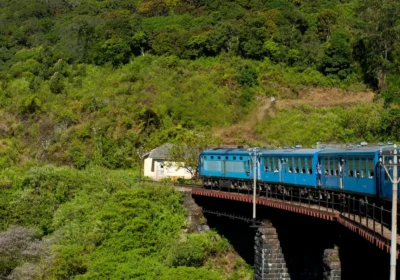
- Trains – cheap, slow, spectacular on the Kandy to Ella line, and the only way to see the highlands properly.
- Buses – the island’s real public transport. Ordinary buses are the cheapest option anywhere, and expressway coaches are faster than the train on some routes.
- Tuk-tuks – for short hops and day hires. Cheap if you agree the fare first.
- Ride-hailing apps – PickMe and Uber in the cities, metered, no haggling.
- Private cars, vans and drivers – the most expensive option per day and the only one that removes all the waiting.
Getting around Sri Lanka by train: classes, fares and booking
Trains are the cheapest long-distance option on the island and the slowest. A second class seat from Colombo to Kandy costs less than a coffee in London, and the same seat buys you a seven hour view of tea country on the way to Ella. For anyone who values the journey itself, this is the most rewarding way of getting around Sri Lanka.
Fares are set by distance and class. This is what Sri Lanka Railways publishes for journeys from Colombo Fort. Every figure below comes from the operator’s own passenger ticket rate table, read again on 15 October 2026 and unchanged from the September check.
| Route from Colombo Fort | Distance | 1st class | 2nd class | 3rd class |
|---|---|---|---|---|
| Kandy | 121 km | Rs 950 | Rs 500 | Rs 240 |
| Peradeniya (for Kandy gardens) | 115 km | Rs 950 | Rs 500 | Rs 240 |
| Nanuoya (for Nuwara Eliya) | 207 km | Rs 1,450 | Rs 750 | Rs 360 |
| Haputale | 248 km | Rs 1,600 | Rs 800 | Rs 400 |
| Ella | 272 km | Rs 1,750 | Rs 900 | Rs 440 |
| Badulla | 292 km | Rs 1,800 | Rs 900 | Rs 460 |
| Anuradhapura | 205 km | Rs 1,450 | Rs 750 | Rs 360 |
| Jaffna | 396 km | Rs 2,250 | Rs 1,150 | Rs 580 |
| Polgahawela | 74 km | Rs 650 | Rs 350 | Rs 180 |
| Katunayake (airport) | 33 km | Rs 350 | Rs 200 | Rs 100 |
Third class is where most Sri Lankans sit, and it is how most of the island does its getting around Sri Lanka travel every day. It is basic, often crowded, and completely safe. Second class adds a padded seat and a little more room. First class means the observation saloon on the hill country trains, and it is worth the money exactly once, on the Kandy to Badulla run.
Sri Lanka train classes, explained quickly
There are three classes and a handful of specials, and choosing between them is the only real decision when getting around Sri Lanka by train.
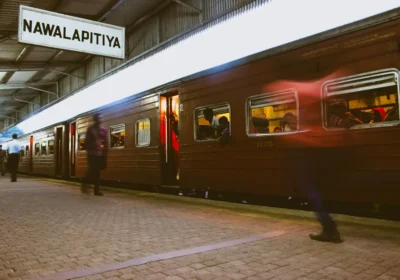
The difference between the classes is space and padding, not speed. Third class is unreserved bench seating, and on busy routes you will stand. Second class is reserved on the intercity and hill country services, which means you get a seat number and a seat. First class is the air conditioned or observation saloon, sold as a reserved berth on a few trains a day.
Two details catch visitors out. Reservations open 30 days before departure, and the observation saloons on the Kandy to Badulla line sell out within days in high season. Second, the cheap unreserved fare is not the reserved fare: if you want a guaranteed seat on the hill country line, you book, and you pay the reserved rate.
How to reserve a seat (and when they run out)
Getting around Sri Lanka by train without a reservation is perfectly possible, but on the busy lines it means standing. Reserved seats can be bought at station counters and through the operator’s online booking service. Take the passport you booked with, and arrive with time to spare: Colombo Fort’s reservation counter is a queue, not a kiosk.
For getting around Sri Lanka by train in high season, book the moment your dates are fixed. If the reserved count is gone, the standard fallback is third class unreserved, which still gets you there. Sit on the left side heading for Ella and the right side coming back if you want the valley views.
Is the hill country line running?
Yes. Sri Lanka Railways states that train services from Badulla to Nanu Oya have resumed after the Ambewela to Nanu Oya section was restored, which Cyclone Ditwa had damaged. That is the section behind the Kandy to Ella stretch most travellers come for, so the full hill country run is open again as we read the operator’s notices on 15 October 2026. If your dates fall in the October to December rains, check those notices before you book rather than after.
Buses: ordinary, semi-luxury, AC and expressway
Buses carry most of Sri Lanka’s passengers and, for getting around Sri Lanka on a budget, they are unbeatable. Fares for getting around Sri Lanka by bus are national, not commercial: the National Transport Commission sets the fare schedule by distance stage and service class, and the current schedule took effect on 6 July 2026. We read the commission’s fare pages again on 15 October 2026 and the July 2026 interim revision is still the one in force.
Four service types matter. Ordinary buses are the cheapest and stop everywhere. Semi-luxury buses have more comfortable seats and fewer stops.
Air conditioned intercity coaches run on the main corridors at premium fares. Expressway coaches use the E01 southern expressway and the E04 central expressway sections, and they are the fastest public transport on the island.
| Service | Route | Fare |
|---|---|---|
| Expressway coach | Colombo to Kurunegala | Rs 930 |
| Expressway coach | Colombo to Kandy | Rs 1,230 |
| Expressway coach | Colombo to Matara | Rs 1,320 |
| Expressway coach | Makumbura to Matara | Rs 1,170 |
| Air conditioned intercity (stage fare) | Colombo to Katunayake | Rs 332 |
| Air conditioned intercity (stage fare) | Colombo to Puttalam | Rs 1,097 |
| Air conditioned intercity (stage fare) | Colombo to Anuradhapura | Rs 1,666 |
This is the one part of getting around Sri Lanka you never have to plan in advance. Buses rarely need booking. Turn up at the bus stand, pay the conductor, and take change in small notes. The exceptions are expressway coaches at holiday weekends and the long haul to Jaffna, where an early start beats a reservation.

Getting around Sri Lanka on a budget
The cheapest combination for getting around Sri Lanka is a second class train on the long legs and ordinary buses in between. Add a day hire tuk-tuk when a walk would eat an afternoon, and skip the AC coaches unless the heat has won.
The less obvious Sri Lanka transport options
Beyond trains, buses and cars, a few options are worth knowing about, because they solve specific problems rather than whole trips. None of them replace the main ways of getting around Sri Lanka, but each one fixes a gap the others leave open.
- Scooters and motorbikes – rented in the beach towns. You need a valid licence with a motorcycle entitlement and an international driving permit. Rain and traffic make this a poor choice for a first visit.
- Self-drive cars – available, but driving standards and left-hand traffic make it the least relaxing option for most visitors.
- Domestic flights – seaplane and light aircraft services connect Colombo with a few resort areas. Fast, weather dependent, and priced like a premium tour.
- Hotel shuttles and shared vans – common at national parks and for the Sigiriya and Dambulla run. Ask your accommodation; they usually book them.
- Three-wheeler day hires – a tuk-tuk driver for a full day is one of the better value Sri Lanka transport options for short distances with lots of stops.
Tuk-tuks: how the fare works when there is no meter
Three-wheelers are the most flexible way to cover short distances, and the most common place visitors overpay. They are also the option most people picture when they imagine getting around Sri Lanka. Outside the app platforms there is no enforced meter, so the price is agreed before you move or not at all.
Here is the honest position on numbers: tuk-tuk rates are not published by any authority, because they are negotiated. That means we do not print a per-kilometre figure and pretend it is official. Instead, use the method that works:
- Ask the price before getting in, for the whole trip, not per person.
- Compare against the same trip on PickMe or Uber. The apps are metered, so the app price is your benchmark even if you end up in a street tuk-tuk.
- Agree the day rate if you want the driver to wait. A day hire costs more than three separate short trips and saves a lot of walking.
- Carry small notes. Nobody in a tuk-tuk has change for a five thousand rupee note at seven in the morning.
- Watch the short hops. That is where the cost of getting around Sri Lanka creeps up fastest, because nobody negotiates a two kilometre ride.
Is there Uber in Sri Lanka? Ride-hailing explained
Yes, but it is not the only app, and in most of the country it is not the main one. Anyone planning to lean on apps while getting around Sri Lanka should install PickMe before landing. PickMe is the Sri Lankan platform, launched in Colombo, and it covers tuk-tuks, cars and larger vehicles in the cities and growing parts of the island. Uber operates in Colombo and a few other urban areas with a smaller footprint.
For getting around Sri Lanka in cities, the apps solve the two problems travellers hate most: agreeing a price and finding a driver who knows the address. Fares are metered in the app, the price is shown before you confirm, and payment can be cash or card depending on the service.
Two practical notes. Coverage thins fast outside the cities, so do not rely on an app in Ella, Arugam Bay or the national park entrances. For getting around Sri Lanka beyond the western province, plan around buses and trains instead. And at Colombo airport, the app pickup point is not the taxi rank; the app will direct you, but you have to walk to it.

Private drivers, cars and vans: when the daily rate pays for itself
A private driver with a car or van is the most expensive way to travel and the only one that removes every wait. For getting around Sri Lanka comfortably on a tight schedule, it is the only honest answer. On the days when you want to see Sigiriya, Dambulla and a spice garden before dinner, no combination of trains and buses will do it.
Rates are quoted per day and vary with the vehicle, the distance and the season, which is why we do not publish a single figure as though it were fixed. Ask for a rate that includes fuel, the driver’s meals and the driver’s accommodation. If a quote looks unusually cheap, that is usually the question it is dodging, and you will pay the difference at a guesthouse counter.
Compare the options for getting around Sri Lanka against the trip you are actually taking:
| If your trip looks like this | Best choice | Why |
|---|---|---|
| Two weeks, two or three bases, hill country included | Train for the hills, bus or driver between bases | The scenic line is the experience, and buses cover the rest cheaply |
| Five days, four hotels, lots of stops | Private driver throughout | Every transfer by public transport would cost you a day |
| Colombo weekend plus the coast | Apps in the city, expressway coach to the coast | Fast, metered, no parking problems |
| Family with young children | Driver with a van | Car seats, luggage and nap timing are impossible on a bus |
| Solo and budget focused | Second class train, ordinary bus, occasional tuk-tuk | Getting around Sri Lanka on this mix costs a fraction of a driver |
Sri Lanka travel time between the main stops
Sri Lanka travel time is the number that ruins itineraries. The distances are small and the journey times are not, because roads climb, villages slow everything down, and freight has priority on the single-track railway. It is the main reason getting around Sri Lanka takes longer than the map suggests.
The table below is the practical side of getting around Sri Lanka: what each journey costs you in hours. These are typical times, not promises. Trains run to their published timetable and are usually reliable in the lowlands; hill country trains lose time in the wet season, and buses lose time in Colombo traffic.
| Journey | Train | Bus or coach |
|---|---|---|
| Colombo Fort to Kandy | 3 to 3.5 hours | 3 to 4 hours |
| Colombo Fort to Anuradhapura | 4 to 4.5 hours | 4.5 to 5.5 hours |
| Colombo Fort to Ella | 9 to 10 hours | 8 to 10 hours with a change |
| Kandy to Ella | 6 to 7 hours | 6 to 7 hours |
| Colombo to Galle | 2 to 2.5 hours | 2 hours by expressway coach |
| Colombo Fort to Jaffna | 8 to 9 hours in daylight | 9 to 11 hours |
| Colombo to Colombo airport | 40 minutes to 1 hour | 1 hour, more in the evening peak |
Two consequences worth internalising. Moving between two bases eats half a day, so plan one move every two or three nights at most. And the scenic hill country train is the slowest train on the island: that is the point of it, not a fault.
Sri Lanka transport cost per day, by travel style
Sri Lanka transport cost per day depends almost entirely on one decision: whether you have your own driver. Everything else is noise by comparison. If you want a single number for getting around Sri Lanka, this is the table to read.
The bands below are built from the published fares on this page, assuming two or three intercity moves a week and local rides in between. They cover transport only, not food or accommodation.
| Style | Daily transport cost | What it looks like |
|---|---|---|
| Public transport only | Rs 700 to Rs 1,600 | Second or third class trains, ordinary buses, the occasional short tuk-tuk |
| Public transport plus apps and day hires | Rs 2,000 to Rs 4,000 | Reserved second class on the long runs, PickMe and Uber in towns, one tuk-tuk day hire |
| Comfort, no driver | Rs 3,500 to Rs 6,000 | First class or observation saloons where they exist, AC intercity coaches, app cars at night |
| Private driver and vehicle | Quoted per day | Fuel, driver costs and vehicle included. The figure depends on vehicle and route, so agree it in writing |
The pattern that saves the most money is boring: travel in the morning, use trains for distance, walk in the towns, and hire a tuk-tuk only when the walk is uphill with luggage. Do that and the daily cost of getting around Sri Lanka drops to the bottom of the range.
How the monsoon changes your transport plan
Two monsoons run on opposite coasts, so somewhere on the island is in season all year. What matters for transport is that the wet season changes both comfort and speed: hill country trains slow in the rain, mountain roads get landslip closures, and coastal boat trips get cancelled. In the wet months, getting around Sri Lanka in the hills means slower trains and closed mountain roads.
If your trip falls in the south west monsoon, plan the east coast and the dry zone and use the trains in the north and centre. In the north east monsoon, the reverse. Build one spare day into any trip that includes a long hill country leg, and check the road before you commit to a driver for the day.
Season by coast is a subject of its own, and we keep the month by month detail in our best time and weather guides.
Money, tickets and the small things that catch people out
Transport is where small practical details decide whether a day goes well. Almost every bad day spent getting around Sri Lanka comes from a small thing, not a big one. These are the ones that come up most.
- Cash still rules. Trains and public buses are paid in rupees, and cards are not accepted at station counters. Apps take cards in the cities.
- Small notes matter. Break a large note before you travel; conductors and tuk-tuk drivers rarely carry change for it.
- Keep the ticket. It gets checked mid-journey, and an unproduced ticket is treated as a fare dodger.
- Luggage on trains has no rack rule. Big cases go overhead or between seats. Travel light on the hill country line and it stops being a problem.
- Seat reservations are per train, not per day. A delayed connection does not carry your reservation to the next service.
- Airport transfers are their own market. Prepaid taxis at the airport have fixed published rates; apps are usually cheaper outside peak hours.
Beyond the fares themselves, the small costs of getting around Sri Lanka add up: water, snacks, a station tea, and the odd short tuk-tuk ride.
For costs beyond transport, our money and practical guides cover currency, cards, ATMs, tipping and what a day actually costs on the ground.

Common mistakes with getting around Sri Lanka
Six mistakes show up again and again in trip reports, and every one of them is avoidable before you land.
- Planning too many bases. Four hotels in a week means four half-days in a vehicle.
- Leaving hill country train seats to the last minute. Reserved seats on the scenic line are the first thing to sell out in season.
- Assuming an app will work everywhere. Ride-hailing is a city tool. Outside them, plan around buses, trains and negotiated tuk-tuks.
- Booking a driver for the whole trip when you only need three days. The expensive option is only worth it on the days with many stops.
- Travelling in the afternoon on a long leg. Mornings are cooler, emptier and less likely to run into a delay.
- Believing the map. Ninety kilometres of hill road is not ninety minutes. Add half an hour for every ten you climb.
What we check before we publish a fare
Every figure on this page comes from an operator’s or authority’s own published schedule, and each one carries the date we checked it. Getting around Sri Lanka on out of date numbers is how trips go over budget, so we recheck the schedules whenever they change. We do not take fares from other travel blogs, and we do not publish a number we cannot attribute.
Where a rate is genuinely commercial, such as a private driver’s day rate or a tuk-tuk fare, we say so instead of inventing a figure. That is why the driver row in the table above has no number: the honest answer is a range you agree locally, not a price we can verify.
Fares in Sri Lanka move with fuel prices and government revisions, so this guide gets rechecked whenever the published schedules change. If you have paid something different, tell us and we will check it against the source.
CeylonFarer travel guides are written on the island and edited by hand. Our editorial policy explains how sources are checked and how corrections are handled.

Frequently asked questions about getting around Sri Lanka
-
What is the cheapest way to get around Sri Lanka?
Ordinary buses and third class trains. A third class fare from Colombo Fort to Kandy is Rs 240 and an ordinary intercity bus is in the same range for similar distances. Getting around Sri Lanka on a mix of trains and buses costs a fraction of any private option, and it is how most Sri Lankans travel every day.
-
Is the train or the bus cheaper in Sri Lanka?
The train, on almost every route where both exist. Third class train fares are lower than bus fares for the same distance, and second class is often still cheaper than an air conditioned coach. The bus is usually faster on the expressway corridors and reaches places the railway never built a line to.
-
Do you need to book train tickets in advance in Sri Lanka?
Only if you want a reserved seat. Reservations open 30 days before departure, and the observation saloons and second class reserved seats on the Kandy to Badulla line sell out first in high season. Unreserved third class needs no booking at all: you buy at the counter and board. It is the cheapest way of getting around Sri Lanka, and the only one that needs no planning.
-
Does Sri Lanka have Uber or Grab?
Sri Lanka has Uber in Colombo and a few urban areas, but the local platform, PickMe, has the wider footprint and covers tuk-tuks as well as cars. Grab does not operate in Sri Lanka. Both working apps are metered, so the price is fixed before you confirm the ride.
-
How much does a tuk-tuk cost in Sri Lanka?
There is no official published rate, because street tuk-tuk fares are negotiated. Use the app price for the same trip as your benchmark, agree the total before you get in, and carry small notes for change. For a full day of short hops, a day hire is usually better value than separate trips.
-
Is a private driver in Sri Lanka worth the money?
For getting around Sri Lanka on days with four or more stops, yes. On days that are one train ride between two towns, no. Rates are quoted per day and vary with vehicle and route, so ask for a rate that includes fuel, the driver’s meals and the driver’s accommodation before you agree to anything.
-
How long does it take to travel around Sri Lanka?
Ten to fourteen days covers a sensible loop with two or three bases. Sri Lanka travel time is the constraint, not distance, and getting around Sri Lanka faster means paying for it: the classic hill country train takes six to seven hours between Kandy and Ella, and every base change costs you half a day in a vehicle.
-
Can you pay for buses and trains by card in Sri Lanka?
No. Station counters and bus conductors take cash in rupees. Ride-hailing apps accept cards in the cities, and prepaid airport taxis accept cards at the desk. Carry enough cash for two or three days of fares and break large notes when you can.
-
Are night trains and buses safe in Sri Lanka?
They are widely used and generally safe, with the honest caveats that apply to night travel anywhere: less visibility, fewer staff around, and long overnight buses arriving before dawn when guesthouses are not ready for you. Solo travellers often prefer daylight services for comfort rather than safety.
-
What is the best way from Colombo airport to the city?
The airport expressway coach and the train from Katunayake are the cheap options, at around Rs 332 and Rs 200 respectively for the standard classes. A prepaid taxi or an app car costs more and takes 40 to 60 minutes outside peak hours. In the evening peak, nothing is fast.
Where these fares come from
Three official sources sit behind the numbers on this page. Sri Lanka Railways publishes the passenger ticket rate tables by line and class, the National Transport Commission publishes the national bus fare schedules, and the Sri Lanka Transport Board runs the state bus services and publishes its fare notices.
- Sri Lanka Railways – passenger ticket rates, timetables and seat reservation rules
- National Transport Commission – the national bus fare schedules, including the revision effective 6 July 2026
- Sri Lanka Transport Board – state bus services and fare notices
Sri Lanka is a country you cross slowly. The plan that works is fewer bases, earlier starts, and a train ticket bought the day the window opens.

Where to go next
Once the transport is settled, the rest of the trip is a routing decision. Getting around Sri Lanka is the part you cannot improvise at the airport. Start with the Sri Lanka itinerary guide, then check the best time to visit Sri Lanka you have chosen.
Arriving from the Gulf or Africa? The ETA visa guide and the airport transfer guide cover the arrival side of the trip, from visa rules to the first night.
Every guide in this cluster, so you can go straight to the leg that matches your trip:
- Sri Lanka train travel – the classes, the observation car and every line.
- Booking train tickets – the official portal, the 30-day window and the refund scale.
- Hiring a tuk-tuk – licence routes, deposit, insurance and the gazetted fares.
- Car hire – the published rate card, the mileage allowance and the licence rule.
- Private driver costs – what a day rate covers, and what it leaves out.
- Colombo airport to Kandy – the first morning, leg by leg.
- Domestic flights – the network, the fares and the waterdromes.
- Bus travel – the classes, the fares and the expressway routes.
- PickMe and Uber – the two apps, compared axis by axis.
- Getting around Colombo – the city on rail, bus and three wheels.
For the wider picture, the destination guides index the rest of the site, and the Sri Lanka money guide covers the cash, card and fare side of the same trip.



No Comment! Be the first one.