

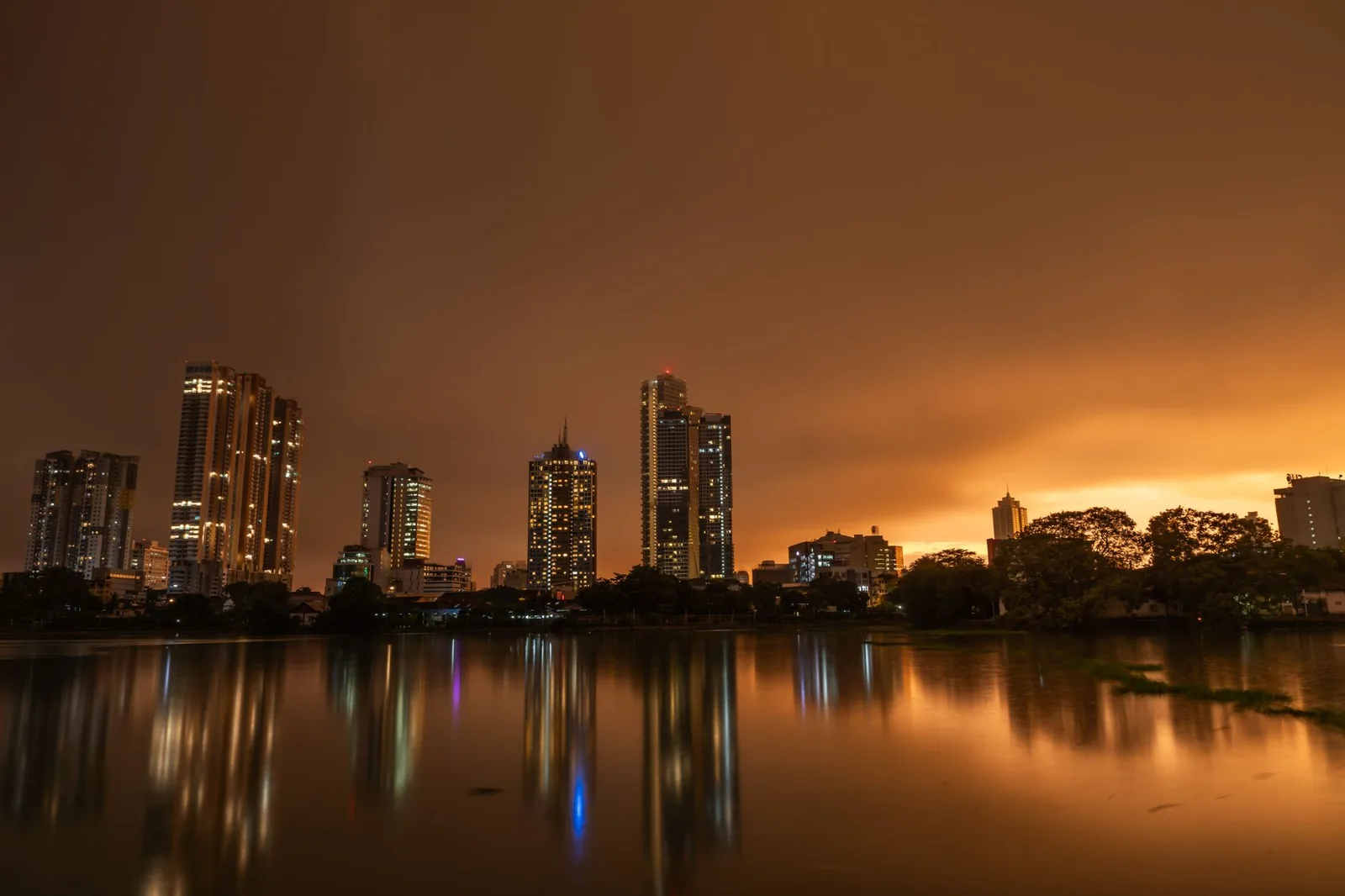
Last updated: 25 October 2026 | Written by Pubudu Dissanayaka, founder of CeylonFarer
Table Of Content
- What the sri lanka monsoon season looks like in numbers
- How to read the two tables
- Two monsoons, and a third wet season nobody plans for
- Why November beats the textbook monsoon months
- Which coast is dry in which month
- The west, south and hill country: January to March
- The east and north-centre: June to August
- Colombo, Galle and the west coast: the May wall
- Trincomalee, Arugam Bay and the east coast: the June window
- Kandy, Ella and the hill country: two wet seasons
- Jaffna and the north: the driest place, and its October switch
- Rain days matter more than millimetres
- What a fourteen-heavy-day month feels like
- What a sri lanka monsoon season does to your route
- Checking our numbers against the department’s own table
- Where the two datasets disagree
- What we could not verify
- Frequently asked questions about the sri lanka monsoon season
- What months are the sri lanka monsoon season?
- Which coast is dry during the sri lanka monsoon season?
- Is it worth visiting Sri Lanka during the monsoon?
- Does it rain all day during the monsoon?
- How wet is Sri Lanka in November?
- Is the east coast dry from May to September?
- Which is worse, the southwest or the northeast monsoon?
- When is the sri lanka monsoon season over?
- Can you travel around Sri Lanka in the monsoon without a car?
- How this sri lanka monsoon season guide was built
- Where to go next
The sri lanka monsoon season is two rainy seasons pulling at opposite halves of one island, and that single fact decides where you can travel in any given month. This page answers it with measurement rather than folklore. We took ten years of daily rainfall for twelve places and turned it into a mean for every month of the year.
The numbers below are ours. They come from the Open-Meteo historical archive for January 2016 to December 2025, and we checked four of the twelve places against the Department of Census and Statistics’ own station table. Where the two disagree, we say so.
The short version: the sri lanka monsoon season does not soak the whole island at once. The west and south take their rain from May to September. The east and north take theirs from October to January, and November is the wettest month almost everywhere.
What the sri lanka monsoon season looks like in numbers
Start with the table, because the table is the argument. These are mean monthly rainfall totals in millimetres for twelve places people actually stay. One row is a place and one column is a month.
Each figure is compiled from 3,653 days of daily records at that point. The sri lanka monsoon months are not the same list on both coasts, and the tables show that in a glance.
| Place | Jan | Feb | Mar | Apr | May | Jun |
|---|---|---|---|---|---|---|
| Colombo | 103.7 | 51.6 | 103.8 | 149.3 | 421.9 | 315.8 |
| Negombo | 87.7 | 47.1 | 93.2 | 147.7 | 390.7 | 268.7 |
| Galle | 151.6 | 106.7 | 120.5 | 175.4 | 411.9 | 278.2 |
| Trincomalee | 163.8 | 66.7 | 50.3 | 63.8 | 102.4 | 32.3 |
| Arugam Bay | 167.9 | 101.7 | 104.8 | 115.7 | 109.3 | 33.1 |
| Batticaloa | 177.2 | 86.7 | 73.6 | 88.8 | 121.8 | 56.7 |
| Jaffna | 67.2 | 30.3 | 24.4 | 56.6 | 115.4 | 49.0 |
| Anuradhapura | 93.1 | 44.6 | 62.5 | 118.4 | 159.4 | 45.7 |
| Kandy | 79.5 | 44.9 | 64.6 | 134.4 | 216.7 | 97.7 |
| Nuwara Eliya | 139.6 | 87.5 | 83.5 | 140.9 | 228.3 | 90.2 |
| Ella | 131.3 | 66.8 | 100.3 | 188.0 | 178.1 | 73.1 |
| Ratnapura | 122.5 | 107.8 | 132.7 | 245.7 | 546.0 | 398.9 |
| Place | Jul | Aug | Sep | Oct | Nov | Dec | Year |
|---|---|---|---|---|---|---|---|
| Colombo | 229.1 | 243.3 | 290.6 | 349.1 | 414.2 | 153.3 | 2825.7 |
| Negombo | 173.4 | 184.7 | 257.1 | 328.8 | 421.2 | 148.2 | 2548.5 |
| Galle | 254.3 | 270.2 | 309.7 | 310.0 | 394.2 | 190.6 | 2973.3 |
| Trincomalee | 50.4 | 72.8 | 83.7 | 243.0 | 402.6 | 232.7 | 1564.5 |
| Arugam Bay | 49.2 | 58.6 | 83.3 | 235.2 | 373.0 | 223.0 | 1654.8 |
| Batticaloa | 56.1 | 77.4 | 127.1 | 273.9 | 346.6 | 232.2 | 1718.1 |
| Jaffna | 46.1 | 76.2 | 79.6 | 224.2 | 371.5 | 177.1 | 1317.6 |
| Anuradhapura | 48.7 | 70.2 | 104.6 | 255.6 | 382.6 | 170.9 | 1556.3 |
| Kandy | 124.6 | 135.5 | 120.9 | 273.8 | 335.0 | 134.3 | 1761.9 |
| Nuwara Eliya | 126.2 | 115.8 | 123.9 | 277.6 | 333.4 | 165.6 | 1912.5 |
| Ella | 88.4 | 102.0 | 146.0 | 316.0 | 394.7 | 181.1 | 1965.8 |
| Ratnapura | 368.0 | 400.5 | 435.2 | 444.3 | 455.2 | 198.2 | 3855.0 |
How to read the two tables
Two things stand out before any explanation. The year column runs from 1,317.6 mm at Jaffna to 3,855.0 mm at Ratnapura, so one island carries a range of almost three to one. And the shape of the year changes from row to row, which is the entire story of the sri lanka monsoon season.
That range is also why the sri lanka monsoon season resists a one-line answer. Scan a column and you can watch the two halves of the island swap places twice a year.
Two monsoons, and a third wet season nobody plans for
Sri Lankan rain is usually described with two names. The southwest monsoon brings the Yala rains from about May to September, driven by winds off the Indian Ocean that hit the west coast and the central highlands. The northeast monsoon brings the Maha rains from about October to January, and it reaches the north and east.
That framing is correct but incomplete, and the table shows why. Nine of the twelve places have their wettest month in November, not in the middle of either monsoon. Only Colombo, Galle and Ratnapura peak in May.

Why November beats the textbook monsoon months
November sits between the two monsoons, in the second inter-monsoon period, when the wind is light and the air is unstable. The result is not steady drizzle. It is organised thunderstorm clusters that cross the island and drop a month of rain in a few days.
In our data November brings 402.6 mm at Trincomalee, 394.7 mm at Ella and 371.5 mm at Jaffna. October and November together are the wettest ten weeks of the year for most of the country, and the sri lanka monsoon season you read about in brochures does not mention them.
Treat November as its own wet season, separate from either named half of the sri lanka monsoon season. It is the month to avoid on the east coast and the month to check twice on the west.
Which coast is dry in which month
The second table is the one to copy into your notes. For each place it gives the three driest consecutive months and the three wettest, with the mean monthly rain in each window.
| Place | Driest three months | Mean rain there | Wettest three months | Mean rain there |
|---|---|---|---|---|
| Colombo | Jan to Feb to Mar | 86 mm | Sep to Oct to Nov | 351 mm |
| Negombo | Jan to Feb to Mar | 76 mm | Sep to Oct to Nov | 336 mm |
| Galle | Jan to Feb to Mar | 126 mm | Sep to Oct to Nov | 338 mm |
| Trincomalee | Jun to Jul to Aug | 52 mm | Oct to Nov to Dec | 293 mm |
| Arugam Bay | Jun to Jul to Aug | 47 mm | Oct to Nov to Dec | 277 mm |
| Batticaloa | Jun to Jul to Aug | 63 mm | Oct to Nov to Dec | 284 mm |
| Jaffna | Feb to Mar to Apr | 37 mm | Oct to Nov to Dec | 258 mm |
| Anuradhapura | Jun to Jul to Aug | 55 mm | Oct to Nov to Dec | 270 mm |
| Kandy | Jan to Feb to Mar | 63 mm | Oct to Nov to Dec | 248 mm |
| Nuwara Eliya | Jan to Feb to Mar | 104 mm | Oct to Nov to Dec | 259 mm |
| Ella | Jun to Jul to Aug | 88 mm | Oct to Nov to Dec | 297 mm |
| Ratnapura | Jan to Feb to Mar | 121 mm | Sep to Oct to Nov | 445 mm |
The sri lanka rainy season is the name most people use for the wet half of this, and the dry column is what that name hides. Read it and the island splits cleanly in two.
Every west, south and hill station is driest from January to March. Every east and north-centre station is driest from June to August. Jaffna, at the northern tip, runs on a third pattern and is driest from February to April.

The west, south and hill country: January to March
Colombo averages 86.4 mm a month across January to March, Kandy 63.0 mm, Nuwara Eliya 103.5 mm and Galle 126.3 mm. That window is when the sri lanka monsoon season works in your favour on this side of the island. The beaches are dry, the hill country is clear, and the east coast is taking the rain you are avoiding.
The east and north-centre: June to August
Trincomalee averages 51.8 mm a month across June to August, Arugam Bay 47.0 mm, Anuradhapura 54.9 mm and Batticaloa 63.4 mm. In the same three months Colombo averages 262.7 mm. That comparison is the most useful single number on this page, and it is why the east coast has a season of its own.
Colombo, Galle and the west coast: the May wall
May is the wettest month in Colombo at 421.9 mm, and it is not a gentle month. An average May delivers 29.7 days with at least a millimetre of rain and 14.2 days with 10 mm or more. That is one heavy-rain day every other day, for four weeks.
May also tops the year in Galle at 411.9 mm and at Ratnapura at 546.0 mm. The Ratnapura figure is the largest monthly mean in our whole dataset, and it comes with 17.6 heavy-rain days. If your plan needs a dry week in the sri lanka monsoon season on the west or south coast, May is not the month to bet on.
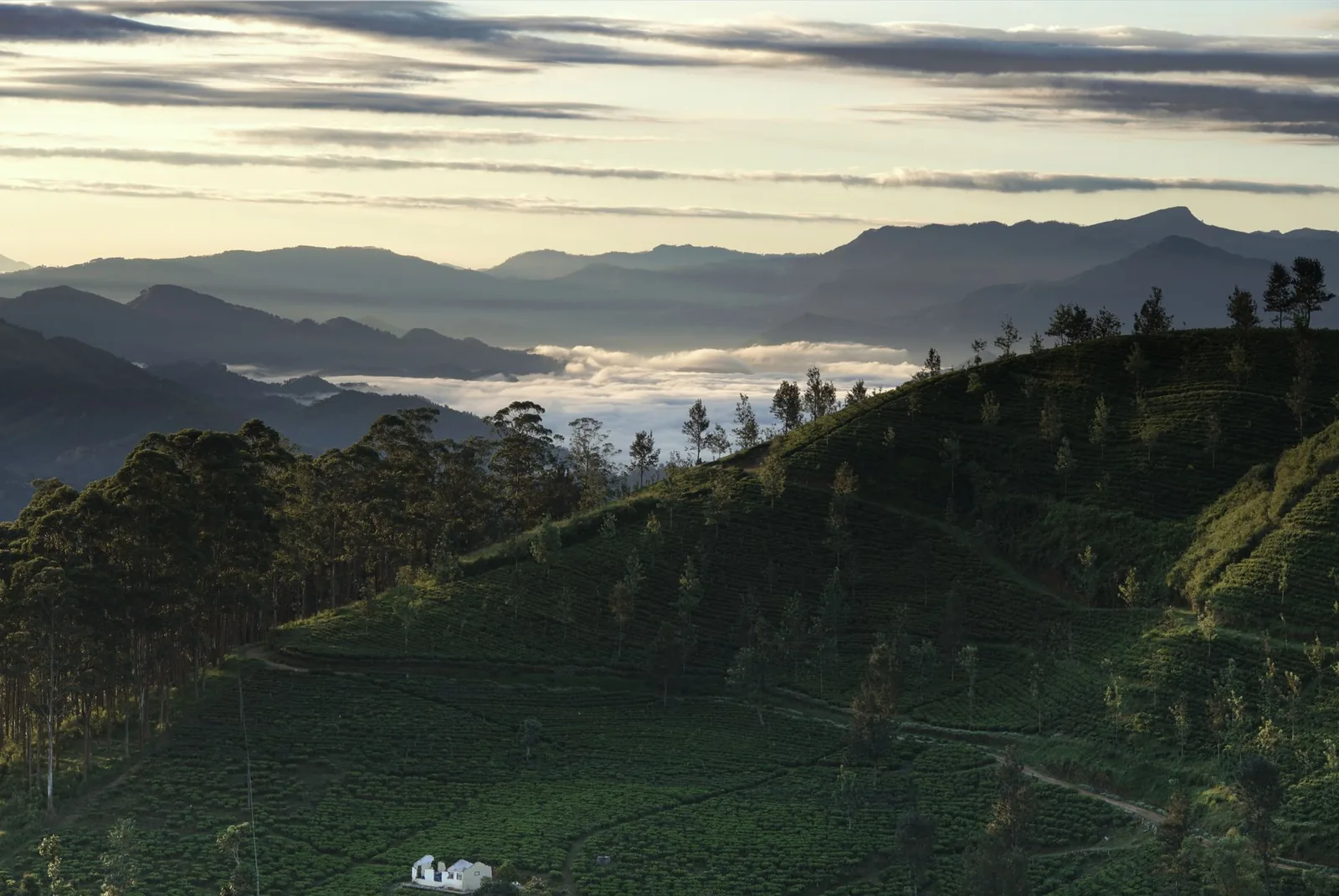
The same logic explains September. It looks like a shoulder month and behaves like the tail of the monsoon, with 290.6 mm in Colombo and 309.7 mm in Galle. October then arrives with 349.1 mm in Colombo, and the west coast stays wet until the northeast monsoon takes over in December.
May is the month to remember in the sri lanka monsoon season on the west coast.
A wet month here is wet in bursts, so an early start still works in the sri lanka monsoon season. The mornings before a storm builds are often clear.
Trincomalee, Arugam Bay and the east coast: the June window
June is the driest month in our dataset after Jaffna’s March. Trincomalee takes 32.3 mm across the whole month, with 0.7 days of heavy rain on average. Arugam Bay takes 33.1 mm. For a coast that sits under the southwest monsoon’s rain shadow, that is as dry as this island gets.

Then the switch comes fast. Trincomalee goes from 83.7 mm in September to 243.0 mm in October and 402.6 mm in November. That is a twelve-fold rise from June to November, and it happens inside five months. The sri lanka monsoon season on the east coast is not a gradual change.
The monsoon in sri lanka is regional, and a June on the east coast is the clearest proof of it.
Batticaloa and Arugam Bay follow the same curve. Arugam Bay runs 33.1 mm in June and 373.0 mm in November, a factor of about eleven. Anyone who books the east for late October on the strength of a “dry season” article is booking the wrong ten days.
Kandy, Ella and the hill country: two wet seasons
The highlands sit in the middle of the island and catch both monsoons, so their driest window is the shorter prize. Kandy is dry from January to March at 63.0 mm a month and wet in May at 216.7 mm, with a second wet stretch from October to December.
Ella is drier from June to August at 87.8 mm a month, which surprises people who assume the hills are wet all year. Nuwara Eliya never gets properly dry: its best window is 103.5 mm a month from January to March, and July and August still bring 126.2 mm and 115.8 mm.

The hill country sits between both halves of the sri lanka monsoon season, so it never gets a clean dry window.
The hills are usable in the sri lanka monsoon season if you accept mist and afternoon rain. The photograph above is a normal wet-month morning, and it is why the train is still worth taking in July.
Jaffna and the north: the driest place, and its October switch
Jaffna is the driest of the twelve places at 1,317.6 mm a year, and its dry window is February to April at 37.1 mm a month. March alone averages 24.4 mm, the lowest single station-month in the dataset.
The north is the exception in the sri lanka monsoon season, and it is the one place where a March trip beats a February one.
It is also the sharpest switch. Jaffna takes 371.5 mm in November against 24.4 mm in March, a factor of fifteen. The north is a genuine dry-season destination in the first half of the year and a wet one at the tail of the sri lanka monsoon season.
Rain days matter more than millimetres
The sri lanka monsoon months you should plan around are the ones with the most heavy-rain days, not the highest totals.
A monthly total does not tell you whether a day is ruined. Days of 10 mm or more do, because that is the threshold where a beach day, a hike or a safari stops working. The third table gives the worst and best month for heavy rain at each place.
| Place | Month with most heavy-rain days | Days of 10 mm or more | Quietest month | Days of 10 mm or more |
|---|---|---|---|---|
| Colombo | May | 14.2 | Feb | 1.0 |
| Negombo | Nov | 14.7 | Feb | 1.3 |
| Galle | May | 14.4 | Feb | 2.5 |
| Trincomalee | Nov | 13.2 | Jun | 0.7 |
| Arugam Bay | Nov | 13.2 | Jun | 0.5 |
| Batticaloa | Nov | 12.1 | Jun | 1.0 |
| Jaffna | Nov | 11.7 | Mar | 0.3 |
| Anuradhapura | Nov | 13.0 | Jun | 0.7 |
| Kandy | Nov | 10.7 | Feb | 1.1 |
| Nuwara Eliya | Nov | 9.5 | Mar | 1.7 |
| Ella | Oct | 13.2 | Jun | 1.4 |
| Ratnapura | May | 17.6 | Mar | 3.2 |
What a fourteen-heavy-day month feels like
Colombo’s May is the clearest example. Fourteen heavy-rain days in a 31-day month means half your days have a washout window in them somewhere. It does not mean constant rain. It means you plan mornings and keep an afternoon alternative.
The east coast in June is the mirror image, with 0.7 heavy-rain days at Trincomalee. That is roughly one such day every six weeks, which is why the sri lanka monsoon season is a good time to be on that coast and a bad time to be in Colombo.
What a sri lanka monsoon season does to your route
The direction of your trip matters more than the dates. A plan that runs Colombo, the hill country, Ella and the south coast is a January to March trip. A plan built around Trincomalee, Arugam Bay and the east is a June to September trip. Trying to do both in one fortnight means accepting rain somewhere.
Our Sri Lanka itinerary hub sets out the shapes by length, and the two week plan and three week plan both carry the monsoon direction rule. If your dates are fixed, read the best time to visit guide first and pick the coast to match.
Landslides and flooded roads are the real risk in the wet months, and the getting around guide covers the alternatives when a hill road closes. The bus guide explains which coach legs close first in a sri lanka monsoon season.
A late-evening landing in a squall makes the airport transfer slower and dearer, so keep the daylight hours in the sri lanka monsoon season.
Flood and landslide warnings are issued by the Disaster Management Centre, and its public notices are worth a glance the week before you fly in the wet months.
Checking our numbers against the department’s own table
A reanalysis is not a rain gauge, so we tested ours against one. The Department of Census and Statistics publishes a station rainfall table in its Statistical Abstract, Table 1.6, covering 2018 to 2023 plus a 1961-1990 average. We kept only the stations where the twelve monthly rows add up exactly to the printed annual totals.
| Station | Our 2016-2025 mean | Department mean 2018-2023 | Department average 1961-1990 | Difference |
|---|---|---|---|---|
| Colombo | 2826 mm | 2530 mm | 3393 mm | +11.7% |
| Jaffna | 1318 mm | 1512 mm | 1440 mm | -12.9% |
| Ratnapura | 3855 mm | 3838 mm | 4781 mm | +0.4% |
| Nuwara Eliya | 1912 mm | 1894 mm | 2157 mm | +1.0% |
Two of the four agree within one per cent. Colombo and Jaffna are off by about twelve per cent in opposite directions, which is what a nine-kilometre grid cell does to a coastal station. Our method and the archive itself are documented at Open-Meteo.
Where the two datasets disagree
Colombo’s wettest month is May in our data and October in the department’s six-year window. That is a real difference, not a rounding error: six years is short enough for one wet October to move the ranking. Both datasets agree on the dry window, which is the part you plan around.
Use our tables for the pattern and the ranking of months, and treat any single millimetre value as accurate to about thirteen per cent. That is a fair test for the sri lanka monsoon season figures here, and the limit does not change where you go.
What we could not verify
The Department of Meteorology’s website did not load on 25 October 2026, from this host or through a reader proxy, so we could not read its own season calendar for this page. The monsoon windows we use are the ones already published in our best-time guide, carried from that department.
We did not measure surf, sea temperature or visibility, so this page stays out of the surf-season argument. Nor did we measure park permit prices or opening hours, which change and are outside this dataset.
Every millimetre here is a reanalysis value on a grid, not a reading from the town you are staying in. Coastal and hill cells are the weakest, which is the main caveat on any sri lanka monsoon season figure we quote.
Frequently asked questions about the sri lanka monsoon season
These are the questions readers send us most often, answered with the figures from the tables above rather than with impressions.
-
What months are the sri lanka monsoon season?
The southwest monsoon runs from about May to September and affects the west, south and hill country. The northeast monsoon runs from about October to January and affects the north and east. October and November are a separate inter-monsoon period, and our data shows November is the wettest month at nine of the twelve places we measured.
-
Which coast is dry during the sri lanka monsoon season?
The east and north-centre are dry from June to August, when the southwest monsoon is running on the other side of the island. Trincomalee averages 51.8 mm a month across those three months against 262.7 mm in Colombo. The west, south and hill country are dry from January to March instead.
-
Is it worth visiting Sri Lanka during the monsoon?
Yes, because one coast is always in its dry window. The monsoon in sri lanka is regional rather than national. A July trip belongs on the east coast, and a February trip belongs on the south and west coasts or in the hills.
-
Does it rain all day during the monsoon?
No. Even Colombo in May, the wettest month we measured, averages 14.2 days with 10 mm or more, which leaves dry days and dry mornings. Rain arrives in squalls and thunderstorm clusters rather than as continuous drizzle.
-
How wet is Sri Lanka in November?
November is the wettest month at nine of twelve places, with 402.6 mm at Trincomalee, 394.7 mm at Ella and 371.5 mm at Jaffna. If you have a choice of dates, November is the month to treat with most care on both coasts.
-
Is the east coast dry from May to September?
Mostly yes. Trincomalee averages 32.3 mm in June and 51.8 mm a month across June to August, and Arugam Bay averages 33.1 mm in June. Those are the driest months anywhere in our dataset after Jaffna in March.
-
Which is worse, the southwest or the northeast monsoon?
Neither, but they land differently. The southwest monsoon is longer and steadier on the west coast, with May at 421.9 mm in Colombo. The northeast monsoon is shorter and heavier in bursts, with Jaffna taking 371.5 mm in November alone.
-
When is the sri lanka monsoon season over?
It never fully stops somewhere. The southwest monsoon fades in September and the northeast monsoon fades in January, but the two inter-monsoon months keep rain in the forecast. By December the northeast monsoon has taken over, and Colombo drops to 153.3 mm from 414.2 mm in November.
-
Can you travel around Sri Lanka in the monsoon without a car?
Yes. Trains and coaches run all year, and the hill line stays open in the wet months. Road closures from landslides are the one real disruption, so check the Disaster Management Centre notices before a hill transfer in October or November.
For one leg rather than the whole sri lanka monsoon season, the getting around guide and the itinerary hub carry the detail this page leaves out.
How this sri lanka monsoon season guide was built
Every number on this page has a source and a date. Nothing here is estimated, and the places we could not check are named above rather than filled in.
| Figure | Source | Read on |
|---|---|---|
| Monthly and annual rainfall for the twelve places | Open-Meteo historical weather API, ERA5-Land reanalysis, ten complete years | 25 October 2026 |
| Heavy-rain day counts | Same daily series, days with 10 mm or more | 25 October 2026 |
| Station means 2018-2023 and the 1961-1990 averages | Department of Census and Statistics, Statistical Abstract 2024, Table 1.6 | 25 October 2026 |
| Monsoon names and their usual windows | The framework we published in our best-time guide, carried from the Department of Meteorology | 13 September 2026 |
| Flood and landslide warning channel | Disaster Management Centre | 25 October 2026 |
Edits and corrections are welcome and get logged. This sri lanka monsoon season guide was written by Pubudu Dissanayaka and reviewed before publication, and it is due for a refresh when the ten-year window moves on.
Plan the direction of the trip around the month, not the month around the trip. That is the only rule that survives contact with a sri lanka monsoon season.
Where to go next
If you already know your month, the best time to visit guide takes the same framework month by month. For the practical side of a wet-season trip, the guides index lists everything by topic.
The three week itinerary is the plan that handles a monsoon switch best, because it has enough days to change coast when the weather does.




No Comment! Be the first one.