


Last updated: 15 October 2026 | Written by Pubudu Dissanayaka, founder of CeylonFarer
Table Of Content
- Best time to visit Sri Lanka: the short answer
- Best time of year to visit Sri Lanka by trip type
- If it is your first trip
- If you are here for beaches
- If you are here for culture and temples
- If it is a honeymoon or a short luxury trip
- If you are travelling with children
- Sri Lanka climate by region
- Month by month: where to go in Sri Lanka each month
- January
- February
- March
- April
- May
- June
- July
- August
- September
- October
- November
- December
- Sri Lanka temperature by month
- Sri Lanka humidity by month
- Sri Lanka surf season by coast
- Whale watching, wildlife and festival windows
- Peak, shoulder and low season: crowds and prices
- The worst time to visit Sri Lanka, honestly
- What to pack for the season you picked
- Frequently asked questions about the best time to visit Sri Lanka
- What is the rainy season in Sri Lanka?
- What is the best time to visit Sri Lanka?
- Is 7 days long enough in Sri Lanka?
- Is December a good time to visit Sri Lanka?
- Which is better, the east or the west coast of Sri Lanka?
- What is the worst month to visit Sri Lanka?
- When is the best time for whale watching in Sri Lanka?
- What is the best time to visit Sri Lanka for beaches?
- Is it safe to visit Sri Lanka right now?
- What is the best time to visit the hill country?
- How this guide is built
- Where to go next
The best time to visit Sri Lanka depends on which coast you are heading to, because the island runs two monsoon seasons on opposite sides. December to March is the window for the west and south coasts and the hill country. May to September is the window for the east coast. If your dates are fixed, the honest answer is that some part of Sri Lanka is always in season, and this guide shows you which part.
It is written for travellers who already have dates, which is the point at which the best time to visit Sri Lanka stops being trivia and starts being a booking decision.
Best time to visit Sri Lanka: the short answer
Two monsoons decide the best time to visit Sri Lanka, and they decide everything else about your route too. The southwest monsoon arrives from the Indian Ocean and soaks the west coast, the south coast and the hill country from roughly May to September. The northeast monsoon does the same to the east coast and the north from roughly October to January. Between them sit two inter-monsoon periods, in March and April and again in October and November, when thunderstorms build across most of the island.
That single fact is the best time to visit Sri Lanka answer for most travellers: pick the coast that is in its dry season, not the month you happen to have free. A December trip to Trincomalee on the east coast sits in the middle of its wet season. The same December in Mirissa, on the south coast, is dry, bright and busy.
| Region | Best months | What that means in practice |
|---|---|---|
| West coast (Colombo, Negombo, Kalpitiya) | December to March | Dry, hot and the easiest place to start or end a trip. Short afternoon showers outside these months are normal rather than trip-ruining. |
| South coast (Galle, Mirissa, Tangalle) | December to April | The classic beach window, and whale watching runs alongside it. Expect peak prices over Christmas and New Year. |
| Hill country (Kandy, Ella, Nuwara Eliya) | January to March | Clearest views of the tea country and the most reliable train-riding weather. Mornings are cool, nights can be cold. |
| East coast (Trincomalee, Pasikuda, Arugam Bay) | May to September | This is the summer beach season, and the surf season at Arugam Bay. It is also when the west coast is wettest, which makes the east the trade-off pick. |
| North (Jaffna, Mannar) | May to September | Dry in the same window as the east. Fewer visitors, and the train from Colombo to Jaffna is one of the best long rides on the network. |
| Cultural triangle (Anuradhapura, Polonnaruwa, Sigiriya) | June to September, plus January to March | Inland and warm all year. It sits between both monsoon systems, so it rarely gets the worst of either. |
The best time to visit Sri Lanka is not the same answer for a two-week trip as it is for a five-day one. A short trip should stay close to one coast rather than chase the dry side across the island.
Working out how many days to give each coast is the harder half of the planning, which we cover separately in the Sri Lanka itinerary guide.
One catch worth knowing before you book: the island is small enough that you can chase the dry side. A two-week trip can start on the south coast and finish on the east. Travellers do exactly that in the shoulder weeks of April and September, when one coast is closing down and the other is opening up.
Best time of year to visit Sri Lanka by trip type
The best time of year to visit Sri Lanka changes with what you came for, so here is the same calendar read five different ways. These are the versions we get asked about most.
If it is your first trip
The best time to visit Sri Lanka for a first trip is January to March. You get the hill country at its clearest, the south and west coasts dry, and the cultural triangle in the middle of a comfortable window. It is also the busiest stretch after Christmas, so book trains and the popular guesthouses early. A first trip that tries to do the east coast in February will spend its days in the rain.
If you are here for beaches
For beaches the best time to visit Sri Lanka splits by coast: December to April for the south and west, May to September for the east. The east coast is the better deal for pure beach time in the European summer, because the crowds that fill Unawatuna in January are in Arugam Bay in July instead, and hotel rates follow them. Water stays warm on both coasts all year, so this is a rain decision rather than a temperature one.
If you are here for culture and temples
The cultural triangle answers the best time to visit Sri Lanka question differently, working best from June to September and again from January to March. Anuradhapura and Polonnaruwa are inland and hot at any time of year, so the practical advice is to start early in the morning and finish by lunch. Temple days are the one part of a Sri Lanka trip where the month matters less than the hour you set off.
If it is a honeymoon or a short luxury trip
For a honeymoon, the best time to visit Sri Lanka is February or March, with the south coast dry and the tea country clear. Late April is a good second choice if you want the shoulder-season rates before the monsoon settles in. Avoid the last two weeks of December unless you enjoy paying peak prices for the same room.
If you are travelling with children
The dry windows on the south coast from December to March and the east coast from May to August suit families best, because they mean calm seas and predictable afternoons. They are also the safest answer to the best time to visit Sri Lanka question if you have school-age children. Poya days, the monthly full-moon public holidays, are quiet for sightseeing and busy for domestic travel, so plan long transfers around them rather than on them.
Sri Lanka climate by region
Sri Lanka climate by region is easier to hold in your head as four separate weather systems rather than one national forecast. The Department of Meteorology tracks the two monsoon systems and the two inter-monsoon periods that shape all of it, and once you know which system is running, the regional picture falls into place.
The wet zone runs down the southwest, covering the coast from Kalpitiya through Colombo and Galle and up into the hill country. It collects most of the island’s rain between May and September. The dry zone covers the north, the east and the southeast, and it sees its rain in the opposite half of the year. Between them sits the intermediate zone through Kandy and the cultural triangle, which catches some of both and rarely gets the full force of either.
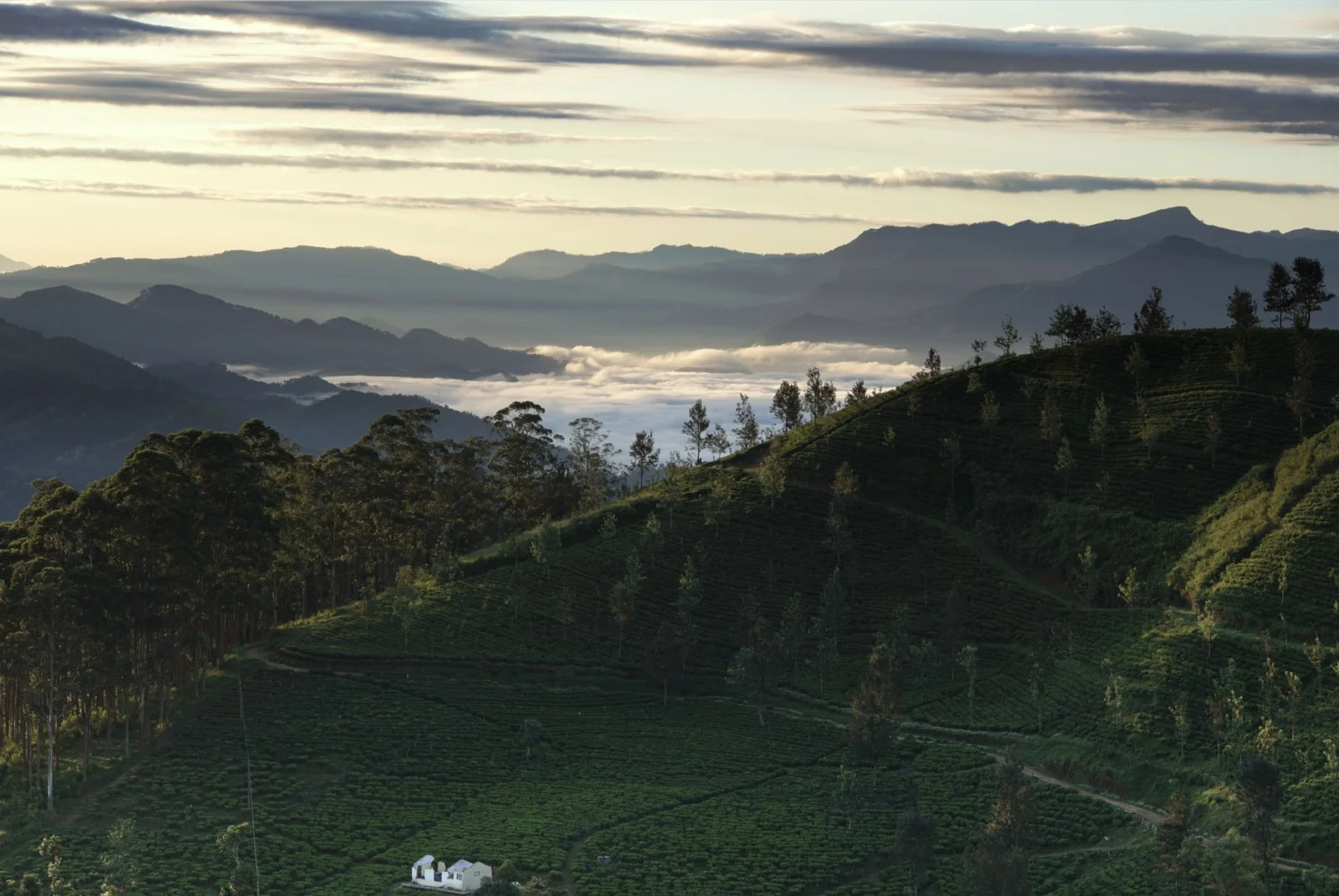
Altitude matters as much as longitude. Nuwara Eliya sits at around 1,900 metres and feels like a different country from Colombo, with cool days, cold nights and mist that arrives in the afternoon. Ella and Haputale sit a little lower and stay milder. If you are building a route, treat the hill country as its own weather region rather than a stop on the way to somewhere else.
Whichever region you settle on, the best time to visit Sri Lanka for that region is set by its own monsoon rather than by a national average. A country-wide forecast is the wrong tool for planning.
Two practical consequences follow. First, a trip that covers both coasts is a trip through two different climates, so pack for both rather than one. Second, the interior is the swing vote in a rainy week: when the coast you wanted is wet, the cultural triangle or a tea estate often is not.
Month by month: where to go in Sri Lanka each month
Everything seasonal on this site collects under best time and weather, if you want to read the monthly detail for one region on its own.
What follows is the month-by-month read, which is how most people actually ask the best time to visit Sri Lanka question. It is written for the decision you are making: which part of the island should your dates point at. Festival dates move with the lunar calendar, so check the official visitor calendar before you book around one.
January
The south and west coasts are reliably dry, the hill country is at its clearest, and the east coast is in its wet season. Crowds peak in the first two weeks and thin noticeably after the middle of the month, and rates follow. This is the best time to visit Sri Lanka if you want the classic beach and tea-country loop, but book the Kandy to Ella train as early as the 30-day window allows.
February
For many travellers this is the best time to visit Sri Lanka, full stop: dry on the south and west coasts, clear in the hill country, hot but not punishing inland, and quieter than January. Whale watching off Mirissa is in full swing, and the sea is calm enough for first-time swimmers. The east coast remains wet, so a February beach trip belongs south.
March
Still dry on the west and south coasts, with the calmest sea of the year and the first build-up of inter-monsoon heat. Late March starts to show afternoon thunderclouds inland. It is a strong value month: the January crowds are gone, the weather has not turned, and hotels are more willing to negotiate outside the New Year window.
April
April is the transition month, and it is the best time to visit Sri Lanka if you want to watch both coasts change over. The south and west turn humid with evening storms, while the east coast improves week by week. The Sinhala and Tamil New Year falls in the middle of the month, when domestic travel peaks and some family-run businesses close for a few days. Book intercity transport and the popular trains ahead rather than on the day.
May
The southwest monsoon settles in over the west and south coasts, while the east coast starts its dry season and Arugam Bay begins its surf season. Vesak, the full-moon festival marking the Buddha’s birth, enlightenment and passing, brings lanterns and quiet streets across the island. May is the month to be in Trincomalee rather than Unawatuna, and it is the best time to visit Sri Lanka if you want the east coast at its driest and cheapest.
June
West and south coasts are wet, the east coast is at its best, and Poson, the June full-moon festival, draws pilgrims to Mihintale. The hill country is green, misty and cheap, though views are less reliable than in the January to March window. Island-wide visitor numbers are near their annual low, which shows in both prices and how empty the trains feel. It is also the best time to visit Sri Lanka if you want the east coast without the July crowds.
July
The east coast is hot and dry, the west and south coasts are wet, and the Esala Perahera fills Kandy with drummers, dancers and elephants in a procession that runs for around ten nights. If you are going, book Kandy accommodation weeks ahead rather than days. Arugam Bay is at the height of its surf season. For east coast surf, this is the best time to visit Sri Lanka.
August
Much the same pattern as July, with the Perahera finishing early in the month and the east coast still in season. European school holidays keep Arugam Bay, Pasikuda and Trincomalee busy, so this is the month when east coast rooms are hardest to find at short notice. The hill country stays misty and green.
September
A shoulder month in the best sense. The east coast is winding down, the west and south coasts are still showery, and prices across the island drop. The cultural triangle and the hill country are comfortable, and surf on the east coast runs into the first half of the month. If you want quiet trains and cheap tea-estate stays, this is your window, and September is the best time to visit Sri Lanka for value rather than for weather.
October
The least predictable month of the year. The inter-monsoon brings heavy afternoon thunderstorms to most regions, and both coasts see rain rather than one taking the hit. It is also the cheapest month for accommodation and the easiest month to get a seat on any train.
Come for culture, tea and low prices, and accept that beach days will be interrupted. It is the cheapest answer to the best time to visit Sri Lanka question, and by some distance the least reliable one.
November
The northeast monsoon arrives, so the east coast and the north turn wet while the west and south coasts improve through the second half of the month. Deepavali falls in this period on the Hindu calendar. Late November is when the south coast season effectively opens, often a few weeks before prices catch up with it, which makes it the best time to visit Sri Lanka for dry beaches at shoulder rates.
December
The south and west coasts are dry, the hill country is clear, and the east coast is wet. From the middle of the month through the first week of January the island runs at peak rates, and the best guesthouses and the observation car seats sell out well in advance. The first half of December is the same weather for noticeably less money, which makes early December the best time to visit Sri Lanka on a budget.
Sri Lanka temperature by month
Sri Lanka temperature by month does not swing much on the coast and swings a lot in the hills. The table below gives typical daytime highs and night-time lows, rounded to the nearest degree, for the southwest coast and for Nuwara Eliya in the hill country. Treat them as planning bands rather than forecasts, because the best time to visit Sri Lanka for comfort and the best time for clear views are not always the same month. The Department of Meteorology publishes station-level figures for exact values, and the World Bank climate portal keeps the country-level historical dataset behind these ranges.
| Month | Coast high | Coast low | Hill high | Hill low |
|---|---|---|---|---|
| January | 29 to 31 | 22 to 24 | 18 to 20 | 8 to 10 |
| February | 29 to 31 | 22 to 24 | 19 to 21 | 8 to 10 |
| March | 30 to 32 | 23 to 25 | 20 to 22 | 9 to 11 |
| April | 30 to 32 | 24 to 26 | 20 to 22 | 10 to 12 |
| May | 29 to 31 | 25 to 27 | 19 to 21 | 11 to 13 |
| June | 28 to 30 | 25 to 27 | 17 to 19 | 11 to 13 |
| July | 28 to 30 | 24 to 26 | 16 to 18 | 11 to 13 |
| August | 28 to 30 | 24 to 26 | 16 to 18 | 11 to 13 |
| September | 28 to 30 | 24 to 26 | 17 to 19 | 10 to 12 |
| October | 28 to 30 | 23 to 25 | 17 to 19 | 10 to 12 |
| November | 28 to 30 | 22 to 24 | 17 to 19 | 9 to 11 |
| December | 28 to 30 | 22 to 24 | 17 to 19 | 9 to 11 |
The practical reading of that table: the coast is warm and humid all year, so the best time to visit Sri Lanka on the coast is a rain question rather than a heat one. The hill country is the only place where you need a jacket, and in December and January you need it at night. Ella sits comfortably between the two, which is one reason it has become the default stop between Kandy and the south.
Sri Lanka humidity by month
Sri Lanka humidity by month sits high all year on the coastal plains, which surprises people who expect a dry heat. Relative humidity on the southwest coast typically runs between 70 and 90 per cent, climbing during the monsoon months and easing in the short dry spells between them. The hill country is wetter still, and the dry zone in the north and east is the one region where humidity drops to something genuinely comfortable during its season.
| Region | Typical relative humidity | When it peaks | What to do about it |
|---|---|---|---|
| Southwest coast (Colombo, Galle, Negombo) | 75-90% | May to September, and again in the October inter-monsoon | Light, loose cotton. Laundry takes a full day to dry unless your room has air conditioning or a fan. |
| Hill country (Kandy, Ella, Nuwara Eliya) | 80-95% | June to August and November | Layers plus a rain shell. Mist forms fast in the afternoon, and camera lenses fog when you move between cold hills and warm hotels. |
| Dry zone north and east (Jaffna, Trincomalee, Arugam Bay) | 60-75% in season | The northeast monsoon, October to January | Highest comfortable window of the year. This is where to go if humid heat is the thing you dislike most. |
| Cultural triangle (Anuradhapura, Sigiriya) | 70-85% | April and the October inter-monsoon | Start temple and rock climbs at first light. By midday the heat and humidity combine into the hardest part of the day. |
Humidity barely shifts month to month on the coast, so the best time to visit Sri Lanka for comfort in the hills is the drier half of the year, when afternoons stay walkable.
Practically, humidity affects three things: how much you sweat on a temple climb, how quickly your clothes dry, and how heavy the afternoon feels. The countermeasure is a boring one: start early, finish by early afternoon, and swim in the late afternoon when the sea is at its warmest. Humidity barely changes with the month, which is why it rarely decides the best time to visit Sri Lanka on its own.
Sri Lanka surf season by coast
Sri Lanka surf season by coast runs on the same two-monsoon logic, which means the island offers waves somewhere in every month of the year. The southwest coast works from November to April. The east coast works from April to October.
Between them there is no dead season, only a question of which side of the island you are standing on. For a surfer, the best time to visit Sri Lanka is simply the season of the coast you want to ride.
| Coast | Season | Best months | Level and character |
|---|---|---|---|
| South and southwest (Hikkaduwa, Midigama, Weligama, Ahangama) | November to April | December to March | Beginner to intermediate. Weligama is a forgiving beach break with instructors on the sand; Midigama and Ahangama suit more confident surfers. |
| East (Arugam Bay, Pottuvil Point, Okanda) | April to October | June to August | Intermediate to advanced. A right-hand point break that gets crowded in peak season, plus reef breaks further north for experienced surfers. |
| West (Kalpitiya, Negombo) | Roughly November to April | January to March | Mostly kitesurfing and flat-water at Kalpitiya, with a shortboard scene at Negombo and Colombo breaks. |
Two things worth knowing before you book a surf camp. First, the south coast is the friendlier side for beginners: Weligama’s beach break is forgiving and there are instructors on the sand. Second, the east coast is the more advanced side, and Arugam Bay’s main point gets crowded in July and August, so early mornings are for surfing rather than breakfast.
Whale watching, wildlife and festival windows
The seasonal calendar applies to wildlife and festivals too, and these are the windows that decide a lot of trips once the beach dates are settled.
Whale watching is the clearest illustration of how the best time to visit Sri Lanka depends on which coast you are standing on, because the two coasts run in opposite seasons. Mirissa on the south coast sees blue whales and sperm whales from November to April, with December to March the most reliable stretch. Trincomalee on the east coast runs its own season from May to September. If you want dolphins instead, Kalpitiya on the west coast and the waters off Trincomalee both have resident pods.
Wildlife viewing follows the dry seasons, and for elephants the best time to visit Sri Lanka is July to October, when the herds gather at Minneriya. Wildlife also concentrates around water when the grass thins, so the right month for a national park is that park’s own dry window rather than the island’s.
Yala is best from February to July for leopard sightings, and parts of the park close for maintenance later in the year. Udawalawe is a year-round elephant park and the least weather-dependent of the big ones. Minneriya and Kaudulla host the elephant gathering from July to October, a wildlife event that has no real equivalent elsewhere in Asia.
Festival windows are worth planning around or away from, depending on your taste. The Sinhala and Tamil New Year falls in mid-April. Vesak arrives on the May full moon, Poson on the June full moon, and Deepavali in October or November. The Esala Perahera in Kandy runs for around ten nights in July or August and is the one festival that genuinely fills the city, so book accommodation for it weeks ahead or avoid Kandy deliberately.
Peak, shoulder and low season: crowds and prices
Commercially, the best time to visit Sri Lanka is a different question from the weather, because the pricing seasons run on their own clocks and they do not line up neatly with the rain. Peak runs from the middle of December to the first week of January, plus the European school holidays. Shoulder covers February, March and the second half of November. Low season is the rest, with September and October the cheapest weeks of the year.
Here is the part most guides leave out: transport fares do not move with the season. Train tickets and intercity bus fares are set by the operators, so a Colombo to Kandy trip costs the same in July as it does at New Year.
On the same published fares, that is Rs 950 in first class or Rs 500 in second class by train, against Rs 1,230 for the expressway coach. Season changes what your accommodation costs and how far ahead you have to book, not what the train charges. For the full picture of what a day on the road costs, see money and practical.
| Season | When | Crowds | What it costs |
|---|---|---|---|
| Peak | Mid December to early January, plus July and August on the east coast | Highest. The observation car and the popular tea-estate rooms sell out well ahead. | Accommodation at its most expensive, with minimum-stay rules in some places. |
| Shoulder | February, March, and the second half of November | Moderate. February is the busiest shoulder month because the weather is at its best. | Fair prices, and the easiest balance of good weather and availability. |
| Low | September, October and the first half of November | Lowest of the year, with trains and temples largely to yourself. | Cheapest accommodation of the year. Rain is the trade-off, not crowds. |
| Monsoon trade-off | May to August on the west and south coasts | Quiet on the west side, busy on the east side. | West coast rates fall while east coast rates rise. Same island, opposite economics. |
Once you see that asymmetry, the best time to visit Sri Lanka stops feeling like a riddle and starts being a choice about budget and coast.
That asymmetry is the single most useful thing to understand about Sri Lanka pricing. In July, a beach hotel on the south coast and an identical one on the east coast are running different seasons, and the difference in what they charge reflects it. Travellers who know this plan their coast around their budget rather than the other way round.
The worst time to visit Sri Lanka, honestly
The worst time to visit Sri Lanka, if the whole island is considered at once, is the October inter-monsoon and the first half of November. Both coasts get rain, thunderstorms build most afternoons, and the hill country spends days under cloud. It is also the cheapest and quietest stretch of the year, which is why the honest answer is a trade rather than a warning. On price alone, it is the best time to visit Sri Lanka, and that contradiction is the point of this section.
One current note for this October. The Department of Meteorology’s climate page carries a NOAA-sourced advisory: El Niño is expected to peak during October to December. We read it there on 15 October 2026. We report it as published rather than as a forecast, because a season guide should not guess where the inter-monsoon rain lands this year.
The second-weakest candidate is the last week of December. The weather is excellent on the south and west coasts, but it is the most expensive week of the year for the same rooms, and the hardest to book at short notice. If you want that weather without that bill, travel in the first half of December, which we would pick as the best time to visit Sri Lanka for weather and value combined.
What does not exist is a month where the entire island is unusable. The two monsoons run in opposition, so somewhere is always in season, and the interior is dry often enough to rescue a wet week. Anyone who tells you to avoid Sri Lanka in a particular month is describing one coast, not the country.
There is no bad month to visit Sri Lanka, only a bad month to be on the wrong coast.
What to pack for the season you picked
Packing follows directly from which half of the island your dates point at, which is why the best time to visit Sri Lanka question comes before any packing list.
- Check which monsoon is running first, then pack for that climate rather than for “Sri Lanka”. That single check is the practical answer to the best time to visit Sri Lanka question.
- Light, quick-drying cotton for the coast, plus one long-sleeved layer for temple visits and air-conditioned coaches.
- A proper rain shell from May to September on the west and south coasts, or October to January on the east coast.
- A warm layer and socks for the hill country, where Nuwara Eliya nights drop close to 10 degrees Celsius in December and January.
- Reef-safe sunscreen and a refillable bottle. Tap water is not for drinking, and bottled water adds up over two weeks.
- Modest clothing that covers shoulders and knees for temples, and something to cover your head in the sun at Sigiriya and Polonnaruwa.

Frequently asked questions about the best time to visit Sri Lanka
-
What is the rainy season in Sri Lanka?
Sri Lanka has two rainy seasons rather than one. The southwest monsoon brings rain to the west and south coasts and the hill country from roughly May to September. The northeast monsoon brings rain to the east coast and the north from roughly October to January. Two shorter inter-monsoon periods in March and April and again in October and November bring thunderstorms across most of the island.
-
What is the best time to visit Sri Lanka?
December to March is the best window for the west coast, the south coast and the hill country. May to September is the best window for the east coast, including Trincomalee, Pasikuda and Arugam Bay. If your dates are fixed, choose the coast that is in its dry season rather than trying to find one month that suits the whole island.
-
Is 7 days long enough in Sri Lanka?
Seven days is enough for one half of the island done properly, not for the whole country. A realistic week covers the cultural triangle, Kandy and the hill country, or Kandy and the south coast. Trying to add the east coast or Jaffna to a seven day trip means spending it in a vehicle.
-
Is December a good time to visit Sri Lanka?
December is excellent on the south and west coasts and in the hill country, and wet on the east coast. The first half of the month offers the same weather as the peak weeks at noticeably lower prices. From mid-December to the first week of January, rooms are at their most expensive and the best places sell out early.
-
Which is better, the east or the west coast of Sri Lanka?
Neither is better, they run opposite seasons. The west and south coasts are dry from December to March and wet from May to September. The east coast is the reverse, dry from May to September. Pick the coast that matches your dates, and if you have two weeks you can travel from one to the other as the seasons turn.
-
What is the worst month to visit Sri Lanka?
October into early November is the least predictable stretch, because the inter-monsoon brings rain to both coasts and the hill country. It is also the cheapest month of the year. Late December is the other awkward window, not for the weather but for peak prices and limited availability.
-
When is the best time for whale watching in Sri Lanka?
Mirissa on the south coast runs from November to April, with December to March the most reliable months for blue whales. Trincomalee on the east coast runs from May to September. Booking an early morning departure improves both the sea conditions and the chances of a sighting.
-
What is the best time to visit Sri Lanka for beaches?
December to April for the south and west coasts, and May to September for the east coast. Water temperature stays warm on both sides all year, so this is a rain decision rather than a temperature one. The east coast is the better value for summer beach travel, because demand follows the European holiday calendar.
-
Is it safe to visit Sri Lanka right now?
Sri Lanka is a well-travelled destination with a large tourism industry, and the practical risks for visitors are the ordinary ones: road safety, strong currents at some beaches, and heat on temple climbs. Check your government’s current travel advisory before booking, and buy travel insurance that covers medical care and any activities you plan.
-
What is the best time to visit the hill country?
January to March gives the clearest views and the most reliable train-riding weather in Kandy, Ella, Haputale and Nuwara Eliya. June to August is green and misty with less visibility but far fewer visitors. Nights are cool all year and genuinely cold in December and January, so bring a jacket.
Those ten answers cover the questions that arrive most often, including the best time to visit Sri Lanka one that starts most of our email. If yours is not here, the month-by-month sections above usually settle it.
How this guide is built
Monsoon timing and the seasonal framework come from the Department of Meteorology, which publishes the official climate data for the island, and whose climate page we read again on 15 October 2026. Festival dates are checked against the official visitor calendar maintained by Sri Lanka Tourism before publication, since the lunar festivals move each year. Temperature and humidity guidance uses long-term station averages, and the World Bank’s climate portal is the dataset we cross-check ranges against. Fares quoted anywhere on this page come from the operators’ own published schedules and are dated.
Where a number cannot be verified against an official source, this guide leaves it out rather than guessing. That is why you will not find a private driver rate here: those are commercial quotes that change by route and season, so the honest advice is to agree a daily rate and what it covers in writing before you start.
Reviewed and updated: 15 October 2026 by Pubudu Dissanayaka.
Where to go next
Once the best time to visit Sri Lanka question is settled, the next decision is the route. The Sri Lanka itinerary guide covers what fits into five, seven, ten and fourteen days, and the transport guide has the train, bus and tuk-tuk detail with 2026 fares. For the regions themselves, start with the destination guides, and for practical planning see money and practical. The rain itself is measured station by station in the Sri Lanka monsoon season guide, and if a figure on this page needs correcting, the editorial policy explains how to tell us and we will fix it.






No Comment! Be the first one.